A beautifully designed faucet should feel as considered as it looks. But when a handle rotates instead of lifting and turning, its operation can surprise someone using it for the first time. Why does the water start cold? Why does the stream become stronger before it becomes warm? And can you have a gentle flow of hot water?
These questions come up when choosing progressive faucet mixers from brands such as COCOON and CEADESIGN. Understanding the control before you specify it helps you choose a faucet that suits both your bathroom design and your daily routine.
What is a progressive faucet mixer?
A progressive mixer uses a rotating control to open the water and move through a sequence of flow and temperature settings. Inside the faucet, the cartridge regulates the openings through which cold and hot water pass.
Unlike a conventional mixer with separate lifting and turning movements, a progressive control links these adjustments along one rotational path. The handle can take a compact, sculptural form—one reason this technology works so well with minimalist bathroom fittings.
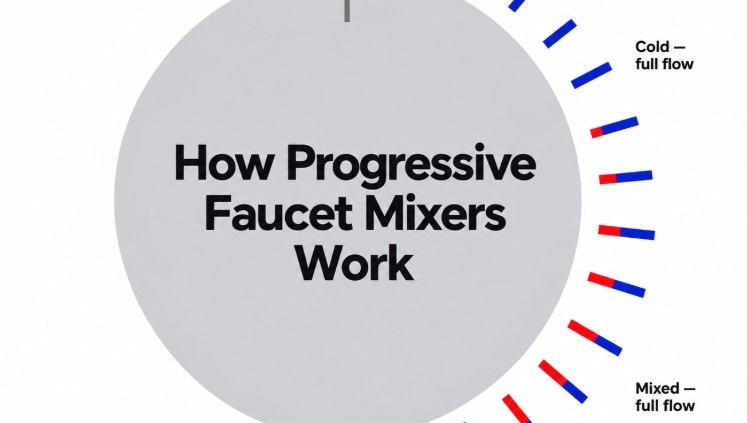
How the water changes as you turn the handle
For the common cold-start progressive arrangement, think of the operation in stages:
| Handle stage | What happens to the water |
|---|---|
| Closed | No water flows. |
| Initial opening | Cold water begins at a low flow. |
| Further opening within the cold zone | Cold-water volume increases toward the faucet’s regulated maximum. |
| Mixing zone | Hot water enters the mix, increasing the temperature while flow is typically at or near its designed maximum. |
| Hot end of travel | The mix approaches the hot supply temperature; exact flow behavior depends on the cartridge. |
Turning farther through the cold zone does not make the water colder. It increases the volume of water from the same cold supply.
The stages above explain the common operating principle, rather than a universal handle diagram. Rotation direction, angles, transition points and flow curves vary by product. Some progressive cartridges include additional features, such as reduced hot flow at the end of their travel. Always use the operating instructions for the exact model.
Can a progressive faucet deliver low-flow warm water?
With a standard progressive mixer, you generally cannot choose temperature and volume independently. By the time the control reaches the warm-water zone, flow is typically already at or near the faucet’s regulated maximum.
Turning the handle back to reduce the stream also moves it toward the cold-water zone. This is the practical distinction buyers should understand: a progressive mixer may not give you the warm trickle you can select with a conventional mixer.
If you regularly want a small stream of warm water—for rinsing a delicate item, for example—discuss that preference when selecting your faucet. A control with independent temperature and volume adjustment may better suit that routine.
“Full flow” also needs context. It means the maximum available through that faucet’s installed aerator or flow regulator under the operating conditions. It does not mean unrestricted water discharge.
Progressive faucets from COCOON
COCOON John Pawson JPSET01: a wall-mounted example
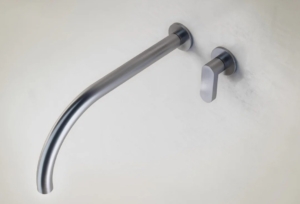
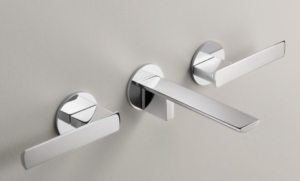
The COCOON JPSET01 pairs a wall-mounted progressive mixer with John Pawson’s restrained design language. Separating the spout and control keeps the composition visually quiet and gives the basin area a clean architectural character.
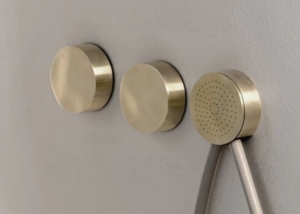
The John Pawson collection by COCOON is made from AISI 316L stainless steel with spout lengths of 200, 275 and 350 mm The fnishes are: Brushed Inox, Dark Grey and Brushed Gold PVD finishes. The BOX12 is the compatible built-in system; the precise regional assembly should be confirmed when ordering.
Progressive operation belongs to the specified model with the JP01 EXT wall-mount handle.
*NEW* Piet Boon progressive options: PBSET01.PR and PBSET11.PR
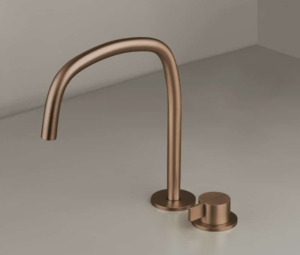 COCOON’s new Piet Boon progressive options bring this control approach to PBSET01.PR for wall-mounted installations and PBSET11.PR for deck-mounted installations.
These options allow designers to consider a rotating progressive control alongside Piet Boon’s substantial, tactile forms. Wall mounting can free the countertop around the basin, while deck mounting offers a different relationship between the faucet, countertop and bowl.
When specifying, identify the complete progressive model code. The new .PR versions should be distinguished from the existing Piet Boon mixer configurations, with the matching rough-in and installation requirements confirmed before construction.
Progressive faucets from CEADESIGN
CEA GIOTTO GIO21: deck-mounted flexibility
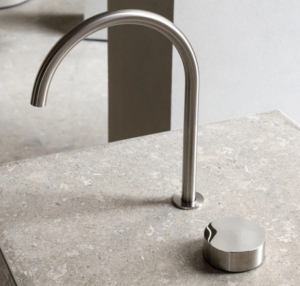
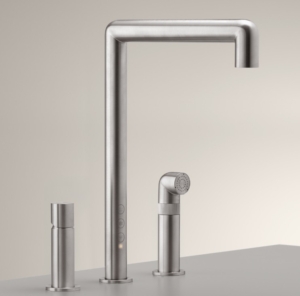
The CEA GIO21 is a two-hole progressive mixer with a swivelling spout measuring 245 mm in height. Its separate deck-mounted control and spout create a simple composition with flexibility in positioning.
CEA’s public specification lists a 5 L/min aerator, approximately 1.3 gallons per minute. This illustrates how a faucet can operate at its designed maximum flow while still using a regulated outlet.
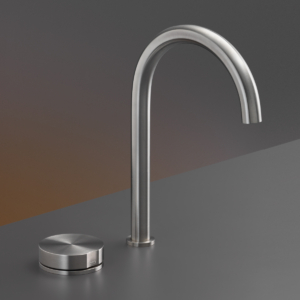
CEA GRADI GRA21: a taller deck-mounted option
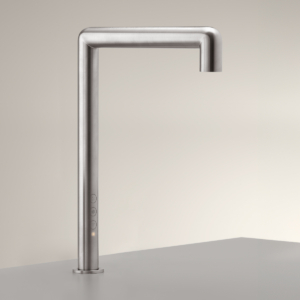
The CEA GRA21 is a two-hole progressive mixer with a swivelling spout measuring 320 mm in height. It offers another proportion to consider when coordinating the faucet with a basin.
CEA also lists a 5 L/min aerator for this model. Spout height alone does not determine suitability: reach, outlet position and basin geometry should be considered together to manage splashing and provide comfortable hand clearance.
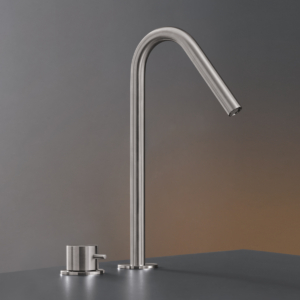
CEA ALLURE ALR103: progressive wall-mounted design
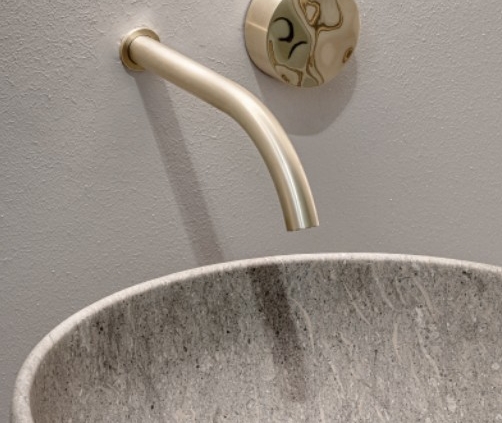
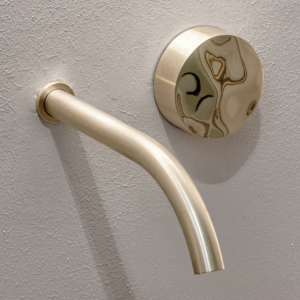
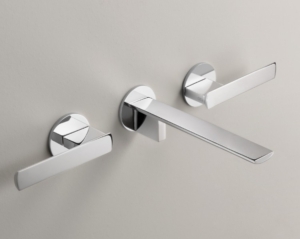
The CEA ALR103 belongs to ALLURE’s wall-mounted progressive mixer range. Designed by Natalino Malasorti, ALLURE uses a reflective handle surface to create a distinctive play of light.
It offers a more expressive approach to the same underlying idea: a compact control that combines opening and temperature adjustment through rotation. Confirm the model’s current dimensions, finish combination and required built-in parts for the project.
Energy savings and water conservation
The clearest energy benefit is cold-start operation. Opening the faucet briefly within the cold zone does not intentionally draw hot water into the mix. For tasks that do not need warmth, this can reduce unnecessary hot-water demand. CEA specifically identifies cold-start progressive operation as an energy-saving feature.
Actual savings depend on how the faucet is used and how the building supplies hot water. Progressive operation does not make hot water arrive faster.
Water conservation is a separate consideration. A suitable flow regulator, sensible running time and prompt shutoff help control consumption. A progressive faucet is not automatically more water-efficient than a conventional mixer: someone who needs a gentle warm stream may use less water with a control that allows that setting independently.
Installation details worth planning early
Match the trim to the correct rough-in. Similar-looking handles can use different valve bodies. Confirm the full model code, built-in assembly and regional connection requirements together.
Resolve finished-wall depth before closing the wall. Wall-mounted fittings must account for framing, waterproofing, tile or stone and the manufacturer’s minimum and maximum installation depths.
Coordinate the spout with the basin. Check reach, height and the point where the stream lands. Allow comfortable access to the control, particularly where a backsplash or vessel basin sits nearby.
Check the supply conditions. Use the manufacturer’s specified pressure and temperature limits. Flush supply pipes before installation to protect the cartridge from construction debris. COCOON’s JP01 handle documentation calls for a pressure reducer above 5 bar static pressure; this is a model-specific instruction, not a universal setting for all progressive faucets.
Confirm the approved local configuration. The exact faucet, aerator and valve assembly should be checked for the project location. A global website’s published flow rate does not establish approval for every US installation.
Finally, progressive does not mean thermostatic. A progressive cartridge mixes hot and cold water; it does not automatically provide thermostatic temperature stabilization or pressure-balancing protection.
Choose the control as carefully as the finish
Progressive mixers offer a compelling combination of compact controls, clean geometry and cold-start operation. Their flow sequence is part of the design—and something worth experiencing before making a final selection.
At Specialty Hardware + Plumbing in Beverly Hills, we help homeowners, architects and interior designers compare COCOON and CEA faucets, coordinate finishes and identify the technical components needed for installation.
Contact SH+P to discuss progressive wall-mounted and deck-mounted faucets for your project, with specification support and shipping across the United States.
Get in Touch
Thank you for your interest in our products. Let us help you with our expertise. Our showrooms are open Monday - Friday 10AM - 5PM. We welcome you to see the beautiful fixtures in person. Fill out this form and we'll get back to you as soon as possible.
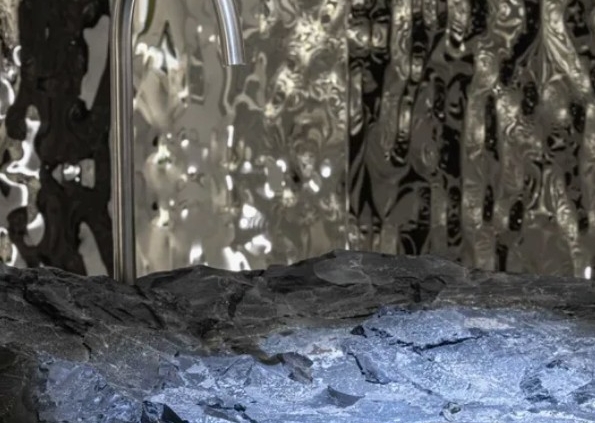
 ALLURE pairs a polished handle face with a satin-finished edge and complementary elements. CEA also lists special finishes for those elements, including Black Diamond, Black Ivory, Bronze, Copper and Light Gold.
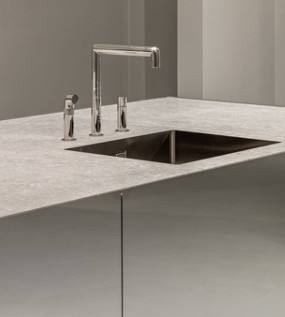
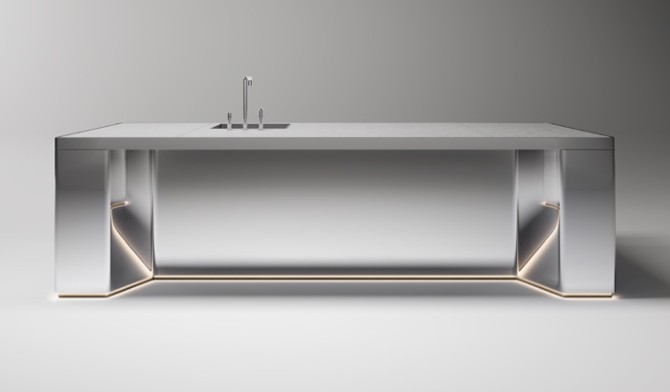
 Think about the routines you want your kitchen to support. Filling a reusable bottle, preparing tea and serving sparkling water each suggest different priorities. Defining those priorities first helps guide the selection of the appropriate tap and equipment package.
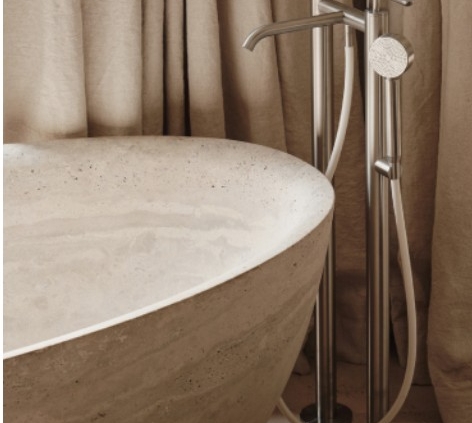
 Bring that list to your consultation along with the floor plan. It helps us discuss the appropriate components and gives your design and installation teams a clearer basis for coordination.